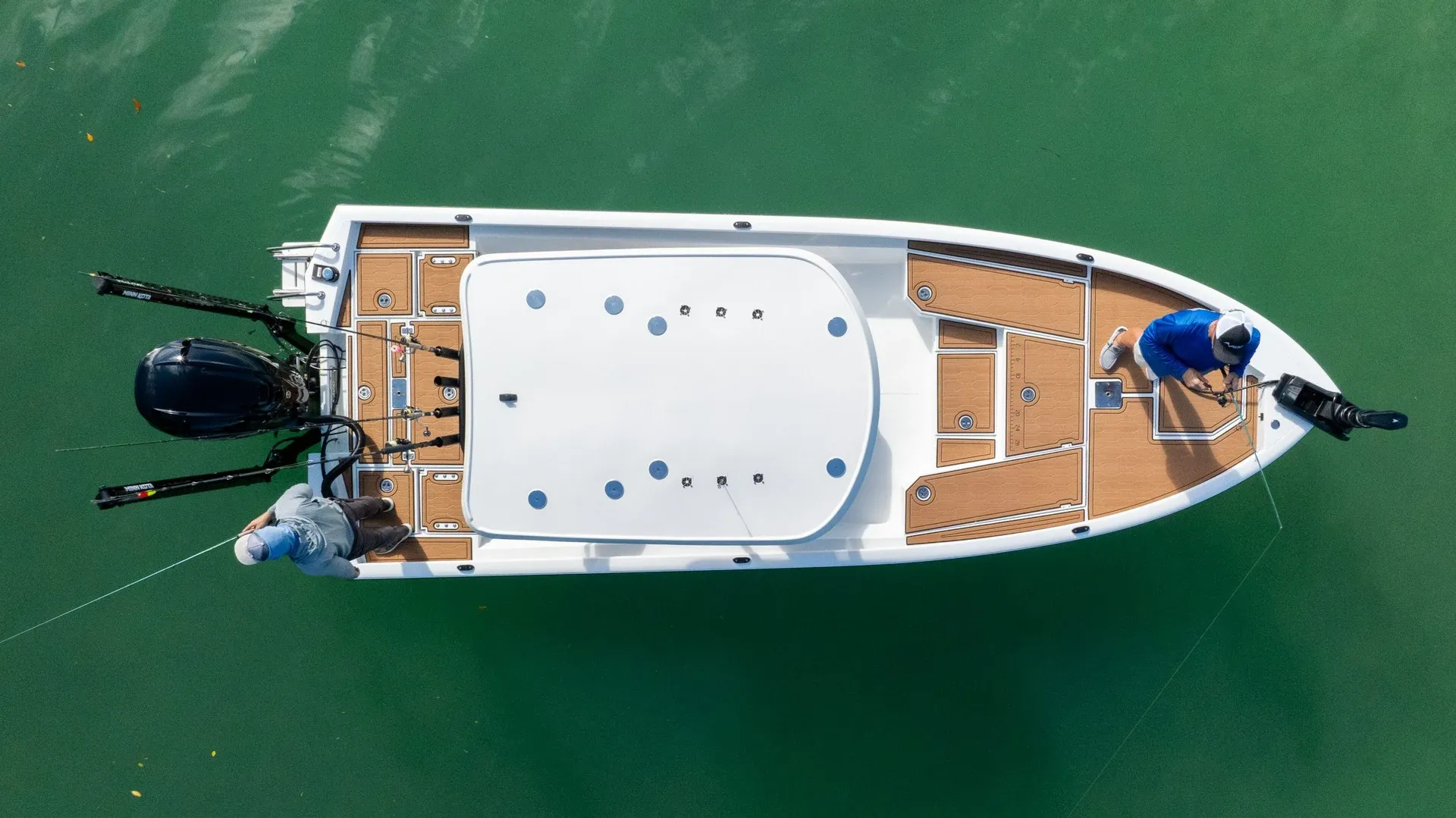


A manufacturer website often meets a buyer well before the dealer conversation. It needs to communicate the character of the brand and help someone work through the details of an important purchase.
Photography and film create the first impression. A useful structure carries that interest into model research, options, and a clear next step.
Make the lineup understandable
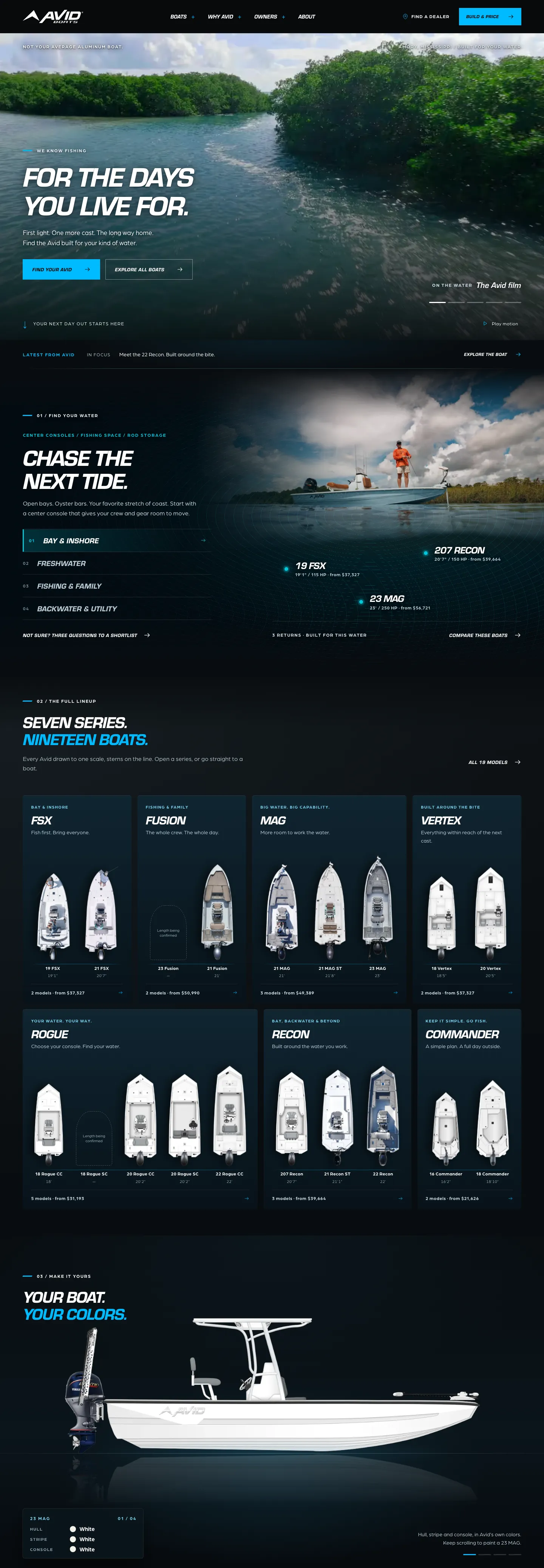
Give each series and model a clear place in the range. Explain the water, use cases, layout, storage, and equipment the boat is designed around. Show the differences a buyer is likely to consider as they narrow the choice.
Comparable specifications and consistent model pages help people move between boats without relearning the interface. Keep the source and ownership of product information clear so the site can stay current.

Show the details people are buying
Wide photography establishes the boat and its setting. Close views help someone understand seating, deck space, compartments, helm layout, hardware, and finish. Captions can connect those details to the way the boat is used.
Film can show the run, the movement through the boat, and the decisions that still imagery leaves open. Plan production around the questions the model page needs to answer.
Explain the choices
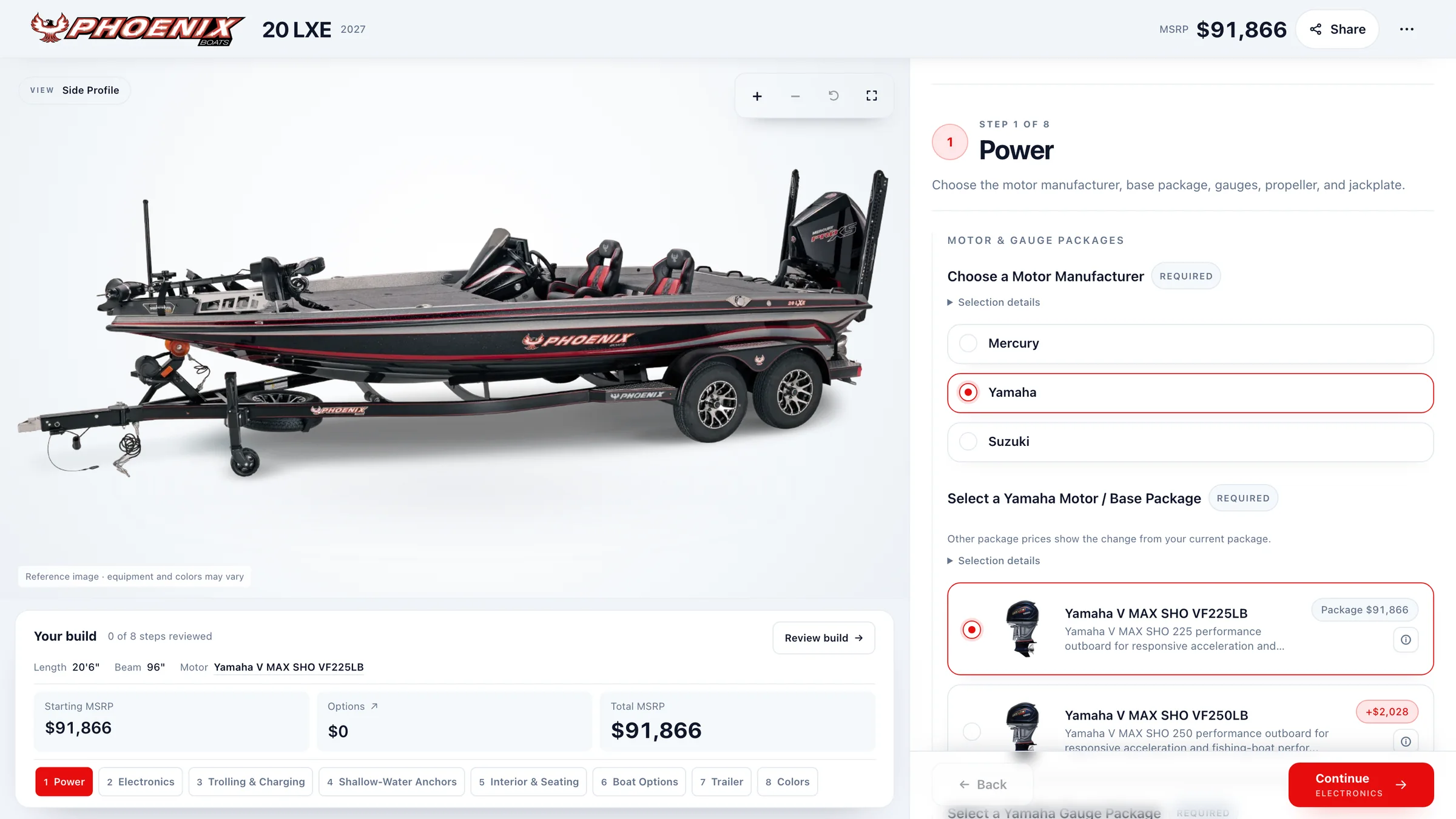
When a configurator is part of the experience, organize choices in a sequence people can follow. The product rules should keep valid combinations understandable, and the summary should carry the selected model and options into the next conversation.
If pricing is shown, explain the assumptions, inclusions, and dealer confirmation that apply. When availability or regional details belong with the dealer, give the buyer a clear way to establish them.
The selected Action Craft project connects model research with a visual configurator and a dealer portal. Its case study shows how the customer-facing choices and the dealer workflow can belong to one broader process.
Explore the Action Craft website, configurator, and dealer portal
Keep the dealer path close
A buyer should be able to move from a model or a saved configuration into a relevant dealer conversation. Carry useful context with the inquiry, agree who receives it, and make ownership of the next step clear.
The form should ask for the information the sales process can actually use. The experience after submission needs to tell the buyer what to expect.
Build around the mobile moment
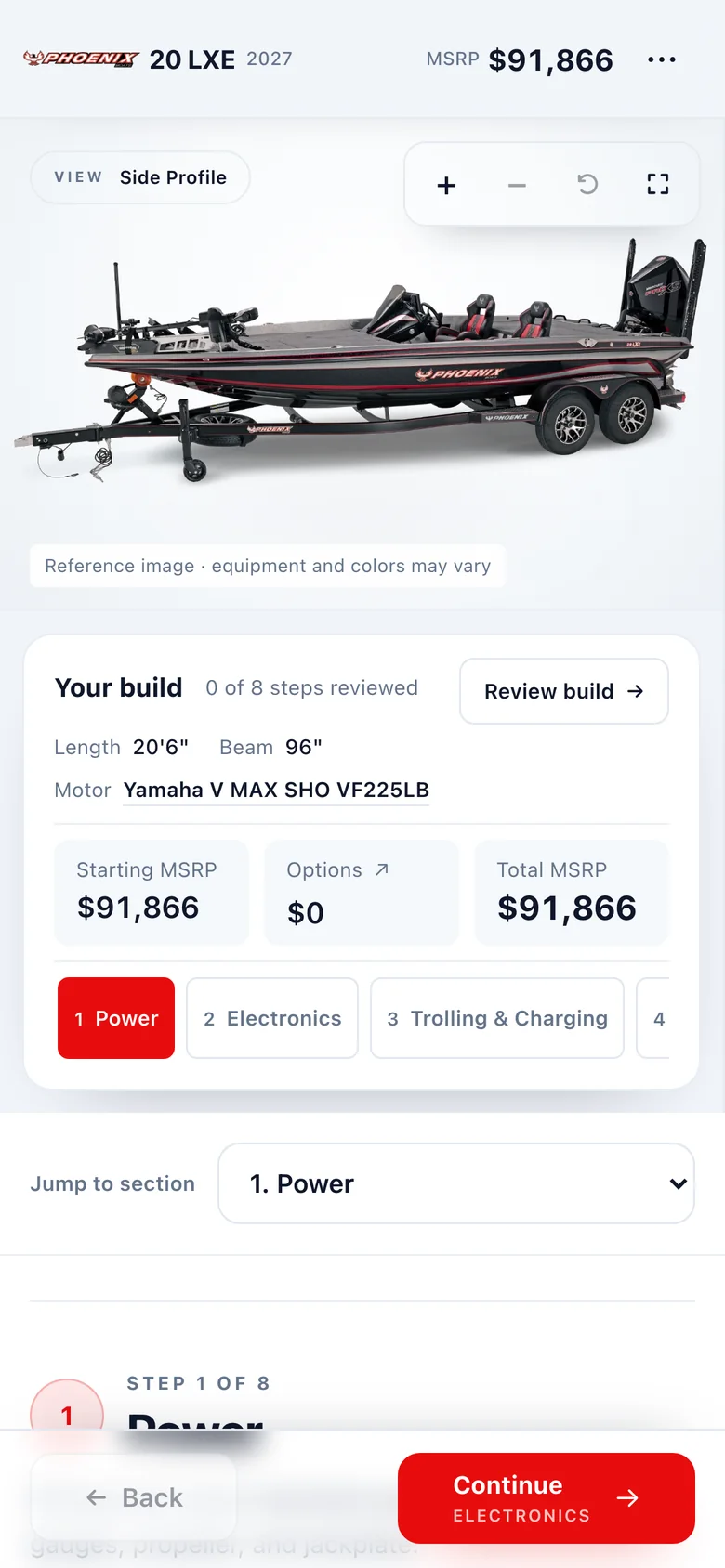
Consider research happening on a phone: after seeing a boat in person, following a film, or opening a link from a dealer. Model information, option controls, images, and contact actions need to remain useful on that screen.
Test the complete journeys with realistic content. Product details, longer model names, optional equipment, and comparison tables all need room to work.
Give the team a way to keep it current
A structured content system can give the manufacturer a practical way to manage model information, specifications, imagery, and supporting stories. Agree which information is authored there and which should come from another source.
The website, production, product data, and dealer handoff all serve the same buying journey. Designing them together gives each part a clear job to do.